

Dr. Tanya Aboukaff is a board-certified pediatric dentist at Roots Dental in Verona, NJ. Dr. Tanya cares for children from their first tooth through adolescence, with a focus on preventive care, minimally invasive techniques, and helping kids grow up unafraid of the dentist.
Nitrous, Oral Sedation, and When Kids Actually Need It
Most kids don't need sedation for routine dental work. The ones who do usually fall into a few specific groups: children too young or too anxious to sit still through treatment, children with sensory sensitivities that make the appointment overwhelming, children with extensive work that would be miserable to power through, and children whose previous dental experiences left them genuinely afraid.
If your child's pediatric dentist has recommended sedation, or if you're wondering whether to ask about it, this covers what pediatric sedation involves, when it makes sense, and what actually happens at the appointment.
Why Sedation Gets Used for Kids
The most common reason is anxiety. A child who's calm at a routine cleaning may not be calm during a filling. A child who was fine at age three may struggle at age five after hearing something scary from a classmate. Anxiety in kids is common, expected, and treatable, and sedation is one of the tools for treating it.
Age is another reason. Young children have limited capacity to sit still through longer procedures. A three-year-old getting one small filling might do fine with local anesthesia and patient dental staff. A three-year-old getting three fillings often can't manage 45 minutes of quiet cooperation, no matter how good the dental team is.
Sensory sensitivities factor in for many kids on the autism spectrum, kids with ADHD, and kids whose sensory processing is different in ways that make dental settings overwhelming. The lights, the sounds, the taste of gloves and materials, the pressure of instruments in the mouth, the vibration of the polisher — any of these can push a sensory-sensitive child past what they can handle. Sedation makes routine care possible for these kids.
Strong gag reflexes are common in children and can make even a basic cleaning difficult. Sedation relaxes the gag enough for the dentist to actually reach the back teeth.
Extensive treatment sometimes just calls for sedation regardless of the child's anxiety level. A young child needing multiple fillings across several teeth is going to have a much better experience getting the work done in one sedated appointment than being brought back for four separate visits.
Previous trauma matters too. Children who've had a difficult dental experience before, either in a general medical setting or specifically at a dentist, often develop anxiety that keeps them from tolerating routine care. Sedation for the next appointment gives them a chance to rebuild trust without forcing them through the fear.
What Pediatric Sedation Actually Involves
Sedation for kids typically means one of three things.
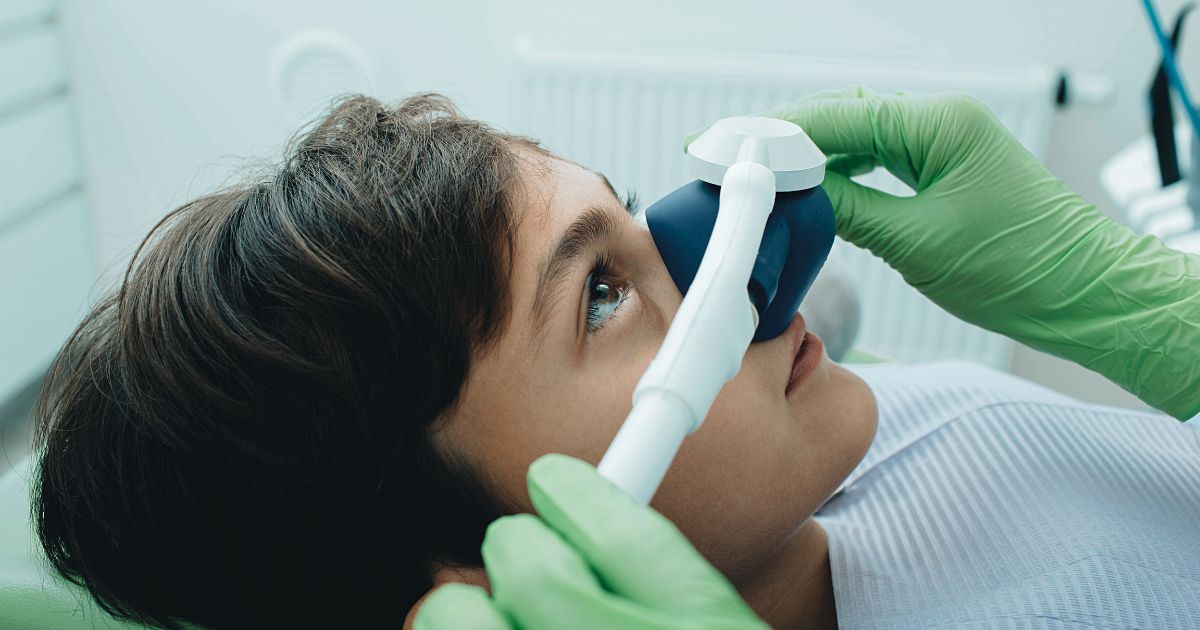
Nitrous oxide, or laughing gas, is the mildest and most commonly used option. Your child breathes it through a small mask that sits over the nose. Within a few minutes they feel warm, relaxed, and floaty. They stay awake and can respond to the dentist. When the mask comes off, the effect clears within minutes and they're back to normal. Most kids handle nitrous well, and it's the default option for children with mild to moderate anxiety.
Oral sedation is medication given as a liquid before the appointment. Your child stays conscious but becomes drowsy and much less aware of what's happening. Many kids don't remember much of the appointment afterward. Oral sedation is used for children who need deeper relaxation than nitrous can provide, or for procedures that will be too long or involved for nitrous alone.
IV sedation and general anesthesia are used less commonly in pediatric dentistry, typically for children with significant special needs, extensive treatment that can't be handled otherwise, or specific medical situations. When these are needed, they're often done in a hospital setting or by a dental anesthesiologist rather than at a general pediatric dental practice.
Which option makes sense for your child depends on their age, their specific situation, and what treatment they're having. That's a consultation conversation with the pediatric dentist, not a decision to make from a webpage.
Is Pediatric Sedation Safe
Yes, when it's done by providers with proper training and monitoring in place.
The American Academy of Pediatric Dentistry has specific guidelines for how pediatric sedation should be administered, monitored, and followed up. Practices that follow those guidelines have strong safety records. The medications and protocols are well established.
What actually matters for safety comes down to a few things. The provider's training in pediatric sedation specifically, not just general sedation. Continuous monitoring during the procedure, including pulse oximetry and heart rate tracking. Thorough review of your child's medical history before sedation happens. Clear recovery protocols and instructions.
Nitrous oxide has the strongest safety profile of the options because it clears the system so quickly. Oral sedation is also safe when properly dosed and monitored. Deeper sedation carries more risk and requires more specialized training and equipment, which is why it's typically handled in specific settings rather than at every pediatric practice.
If you have concerns about safety at the practice you're considering, ask what training the provider has, what monitoring is in place, and what happens if your child has an unusual response. A good practice answers those questions specifically.
What to Expect Before, During, and After
Preparation depends on the sedation type. For nitrous oxide, there's usually no special preparation beyond the normal appointment routine. Your child eats and drinks normally, and shows up ready to be seen.
For oral sedation, the dentist will give you specific instructions. Often that includes not eating for several hours before the appointment, which is standard for anything that involves conscious sedation. Follow the instructions exactly. The safety of the sedation depends on it.
The appointment itself starts like a normal visit. The dental team reviews your child's medical history, takes their vital signs, and answers any last questions you have. Sedation gets administered. For nitrous, that's putting on the mask and having your child breathe normally. For oral sedation, that's giving the medication and waiting for it to take effect, usually 20 to 30 minutes.
Once your child is appropriately sedated, treatment begins. You'll typically be in the room or nearby, depending on the practice's protocols and what makes your child most comfortable. The dental team monitors your child continuously.
Recovery depends on the sedation. With nitrous, your child is fully back to normal within minutes of the mask coming off. With oral sedation, recovery takes several hours. Your child will be drowsy, unsteady, and possibly nauseous for a while. Most kids sleep for a stretch after coming home and are back to normal by the next morning.
You'll get specific instructions for what to expect at home and when to call if something feels wrong. Follow them carefully. Most recoveries are uneventful, but knowing what's normal and what isn't matters.
When Sedation Isn't the Right Answer
Sedation isn't the default answer to every anxious child. Some situations call for other approaches first.
A child who's simply nervous about a first visit usually doesn't need sedation. What they need is a patient dental team, a short appointment focused on getting comfortable, and time to build trust. Rushing to sedation for a child who could handle the appointment with the right preparation isn't the right call.
A child who's had one bad experience often benefits from a slower, gentler approach at the next appointment before jumping to sedation. Practices that specialize in anxious kids handle this well. The next visit might be very short, focused on rebuilding comfort, with no procedures at all. Then the visit after that. Then the one after that. Gradual reentry works for many kids without needing sedation.
A child whose anxiety is severe and hasn't responded to other approaches is a different situation. That's where sedation becomes the right tool, and where a pediatric dental team should be honest about it. Trying to force treatment on a severely anxious child without sedation creates lasting trauma that makes future dental care harder, not easier.
The judgment of when to use sedation and when to try something else is what a good pediatric dentist brings to the conversation. It's part of why the consultation matters.
Common Questions From Parents
Will my child remember the appointment? With nitrous, usually yes, though the memory is often hazy. With oral sedation, often not much. With deeper sedation, typically no memory of the procedure at all.
Will my child be scared of the sedation itself? Most kids find nitrous oxide interesting rather than scary. The mask can be positioned as something fun, and the warm floating feeling tends to be pleasant. Oral sedation feels like being very sleepy, which most kids find manageable. If your child has specific concerns about the sedation experience, mention it at the consultation.
What if my child refuses the sedation? For nitrous, this happens occasionally, and the dental team will work with your child. For oral sedation, the medication has to be given before the appointment, so this is less commonly an issue. If your child is likely to refuse sedation entirely, that's worth discussing at the consultation so a plan can be built around it.
How long does the sedation take to wear off? Nitrous, within minutes. Oral sedation, several hours. Deeper sedation, longer. Your child won't be back to normal immediately after any type except nitrous.
Can my child eat afterward? Instructions vary by sedation type. Nitrous, yes, normally. Oral sedation, usually just after the drowsiness has worn off. Deeper sedation, usually starting with clear liquids and progressing based on how your child is doing.
Pediatric Sedation at Roots Dental
Pediatric care at Roots Dental is led by Dr. Tanya Aboukaff, a board-certified pediatric dentist. Sedation gets used when it's the right tool for the child and the treatment, matched to what your child actually needs rather than as a default add-on.
Nitrous oxide is available for children who benefit from mild sedation to get through an appointment comfortably. Deeper sedation options depend on the specific case and get discussed at the consultation.
If your child has been struggling with dental appointments, has treatment coming up that's likely to be difficult, or has specific needs that make routine care challenging, the consultation is where those specifics get worked out.
Roots Dental serves Verona, Montclair, Cedar Grove, Caldwell, and the surrounding Essex County area.
Not Sure If Your Child Needs Sedation?
A Consultation Answers That
Some kids need sedation. Most don't. What your child needs depends on their specific anxiety, sensitivities, age, and what treatment is coming up. A consultation with the pediatric dentist gives you a real answer for your child, not a general recommendation from an article. Whether sedation is the right tool or not, that's where the conversation happens.